
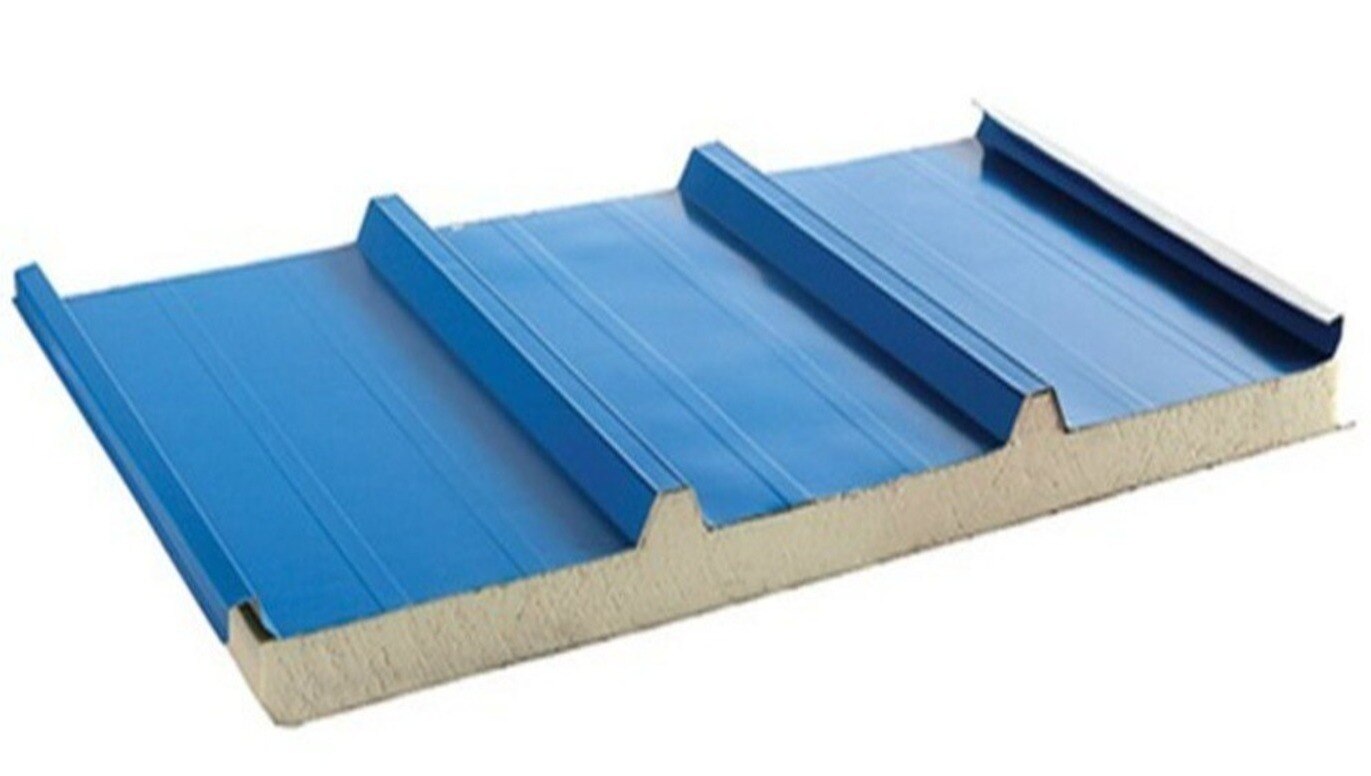
Leaks in an insulated roof are not always caused by a failed panel. You will learn how to trace water, condensation, thermal bridging and installation damage to their actual source, then decide whether to reseal, repair, reinforce or replace the affected system.
Key takeaways
- Trace leaks uphill from the highest interior wet mark.
- Inspect seams, fasteners, flashing and drainage before blaming the panel core.
- Replace panels with crushed, delaminated or persistently wet insulation.
- Compare joints, drainage design, cut quality and condensation control before buying.
How to Tell Whether the Leak Is in the Panel or the Roof Joint
A leak following a seam, screw line or flashing edge usually indicates a roof-joint failure; a panel-core failure leaves insulation crushed, delaminated or persistently wet. Start at the highest wet mark, not the visible interior stain.
Inspect these points in order:
- Side laps and end laps for open joints, displaced sealant or incorrect engagement.
- Ridge caps and parapet flashings for failed overlaps and drainage paths.
- Gutters and low points for blockage, ponding and overflow marks.
- Wall junctions for gaps behind flashing.
- Ducts, pipes, skylights and exhaust-fan penetrations for unsealed edges.
- Fastener points for loose screws, damaged washers or distorted sheet metal.
| Source | Typical pattern | Confirmation |
|---|---|---|
| Rain entry | Appears after rain; tracks from a lap, flashing or penetration | Hose-test one detail at a time from the lower edge upward |
| Plumbing leak | Can continue during dry weather; follows a service route | Compare with pipe use, valve operation and ceiling location |
| Unsealed opening | Concentrates around a duct, pipe, skylight or fan | Inspect the cut edge, exposed foam and missing formed flashing |
A panel-core problem shows water tracking within the panel, corrosion at a cut edge or wetness that persists after the roof dries. A sound metal facing cannot compensate for an open joint, missing sealant or damaged core—common puff roofing panel problems.
Ask for the panel drawing, joint detail and installation record before removing sheets.
Which Pune Conditions Expose Installation and Drainage Weaknesses
Monsoon rain turns a small installation defect into a commercial-building failure when water cannot drain away. Inspect roof slope, low-point ponding, blocked gutters, lap direction, panel alignment and support spacing before blaming insulation thickness; standing water adds leakage pressure and loads that a span calculation may not cover.
- Check end laps, side laps, ridge caps, parapet flashings and penetrations for continuous sealant and correct overlap.
- Check whether wind-driven rain can enter an end lap or flashing that remains dry during ordinary rainfall.
- Check the quoted span table against installed panel thickness, face thickness, support spacing, wind suction, maintenance load and fixing arrangement.
| Condition | Weakness exposed | Inspection focus |
|---|---|---|
| Monsoon downpour | Ponding or gutter overflow | Roof falls, outlets and debris |
| Wind-driven rain | Open lap or flashing edge | Sealant, overlap and lap direction |
| Heat and ultraviolet | Shrunk sealant, coating stress or open joints | Perimeters, fasteners and penetrations |
| Dust and humidity | Blocked drainage or condensation risk | Gutters, joints and underside surfaces |
Ultraviolet exposure, dust, humidity and rapid temperature changes stress coatings, sealants and joints. Heat cycling exposes thermal bridges at purlins, fasteners, perimeters and penetrations even when the undamaged foam field meets its nominal rating.
Treat a puff roof sheet as non-walkable unless documented testing proves otherwise. Keep workers off spaces between purlins; use designated walkways or independently supported access routes. An under-driven screw leaks, while an over-driven screw dishes the washer and deforms the sheet, so inspect washer compression at every suspect fixing.
What Improper Cuts and Condensation Look Like Underneath
A damp underside does not prove rain entry: compare the wet pattern with rainfall, indoor humidity and the location of each service opening before replacing a panel.
1. Inspect ducts, skylights, exhaust fans, pipes and electrical penetrations for oversized cuts, exposed foam, unsealed edges, missing framing and discontinuous vapour seals. A badly formed opening usually concentrates staining around its perimeter.
2. Treat a site-cut opening as a corrosion risk. Remove steel swarf, protect the cut edge with a compatible coating, and install formed flashing with positive drainage; silicone alone is not a durable detail.
3. Look for rain tracks from the exterior detail after rainfall. Check the opening, flashing and adjacent joint first, because water can travel along the panel face or framing before appearing underneath.
4. Condensation spreads across cooler underside areas, especially at joints, purlins and metal fasteners, and it can appear during humid operating periods without rain. Warm, moisture-laden indoor air forms droplets when it reaches a roof surface below its dew point; inadequate ventilation, missing vapour control and temperature changes increase the risk.
5. Record indoor humidity, air-conditioning operation, roof temperature and insulation condition. In puff roof sheet applications, dry wet insulation and remove trapped moisture before closing the assembly, or the concealed dampness will continue corroding facings and fasteners. A thermal bridge can create a local wet spot even when the foam field remains dry.
When Can You Repair a Puff Roof Sheet, and When Must You Replace It
Repair a puff roof sheet when the metal facings remain sound, the panel is not permanently deformed and the supporting purlin still has adequate pull-out strength. Replace it when the damage affects the insulated core, the panel shape or the support connection.
| Defect | Repair action | Decision |
|---|---|---|
| Failed screw or washer | Remove it and fit a compatible fastener with correct length and washer compression | Repair if the purlin passes pull-out checks and the sheet is not deformed |
| Failed side lap, end lap or ridge-cap seal | Remove old sealant, clean both surfaces and apply one continuous compatible seal | Repair if the joint and facings remain sound |
| Damaged flashing | Renew it with correct overlap and drainage direction | Repair after clearing blocked gutters and checking adjacent joints |
| Crushed core, permanently deformed panel or delaminated facings | Remove and replace the panel | New panel required |
| Wet insulation that remains damp after opening and drying | Remove the affected panel and wet material | New panel required |
| Widespread corrosion or recurring leaks after joint repairs | Replace the affected panel and investigate surrounding details | Patchwork is no longer reliable |
| Pulled-out or overtightened fasteners | Do not simply fit a larger screw | Replace the panel or repair the support connection after investigation |
Inspect a corroded purlin before refixing; a new screw cannot restore weakened steel. Over-driving can dish the washer and deform the sheet, while pull-out damage leaves insufficient holding power.
Keep a marked roof plan, photographs, moisture findings and fastener test results. This record shows whether repairs solved the cause or merely created undocumented patchwork.
How Should You Compare Panel Systems Before the Next Pune Project
A low price per square metre is not a like-for-like comparison. For puff roof sheet applications, check the complete system: panel geometry, structural capacity, drainage details, installation hardware, delivery losses and warranty exclusions.
| Item | Verify | Why it matters |
|---|---|---|
| Effective covered width | Usable width after the joint, not the overall panel width | Determines sheet quantity and roof layout |
| PUF or PUR core | Thickness and density, such as 50 or 80 mm | Nominal thickness alone does not prove stiffness or insulation performance |
| Metal facings | Thickness and grade on both faces | Thin or mismatched facings reduce fixing and impact resistance |
| Coating system | Coating type, substrate, colour and exposure suitability | Pune sun, dust and monsoon moisture attack an unsuitable finish |
| Joint and orientation | Joint geometry, roof approval, drainage profile and direction | A wall joint can admit wind-driven rain on a roof |
| Panel limits | Maximum manufactured length and approved roof slope | Long panels can create handling, alignment and drainage problems |
| Design evidence | Tested load tables, wind-suction resistance and fire classification | A span table is a design input, not proof that any 50- or 80-mm panel suits your purlins |
| Accessories | Flashings, fasteners, washers and compatible sealants | A weak edge detail can defeat a sound panel |
Ask the project engineer to verify purlin spacing, maintenance loads and independent framing for solar rails, suspended services and equipment. Confirm walkability and fixing details before choosing Metecno Puff Monowall in Pune; an insulated wall panel is not automatically a roof panel.
Motilal Sheshmal and company can help compare the panel, flashing and fixing package, while the engineer approves structural loads, fire documents and detailing. Include rejected sheets, extra framing and future leak work in the cost.
Related products
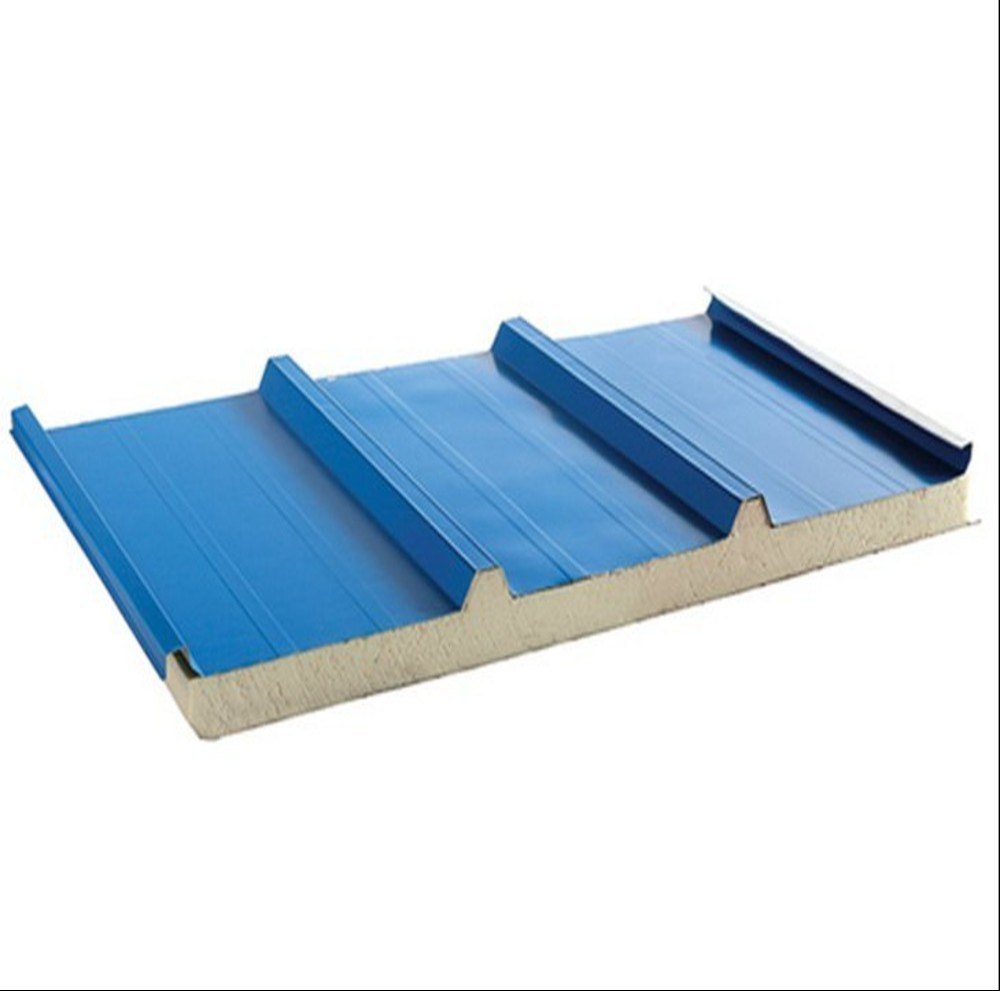 | Sandwich Panel Sheets Metecno Puff Glamet Roofing Panel The sandwich panel consists of two facings of relatively thin metal sheet profiled preferably and of high strength enclosing a core, which is... View product → |
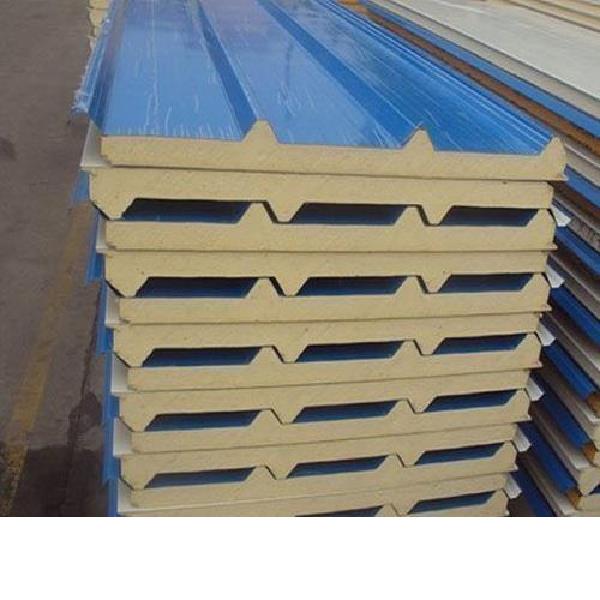 | Sandwich Panel Sheets Metecno Puff Monowall Roofing Panel The sandwich panel consists of two facings of relatively thin metal sheet profiled preferably and of high strength enclosing a core, which is... View product → |
Frequently asked questions
How can you tell whether a leak is in the panel or roof joint?
A leak following a seam, screw line or flashing edge usually indicates a roof-joint failure. Crushed, delaminated or persistently wet insulation points to panel-core damage. Start at the highest wet mark rather than the visible interior stain.
Which Pune conditions expose installation and drainage weaknesses?
Monsoon rain, blocked outlets, inadequate roof falls, poorly sealed penetrations and standing water expose weak installation and drainage. Inspect gutters, valley lines, overlaps, flashing and fasteners after heavy rain.
What do improper cuts and condensation look like underneath?
Improper cuts can leave exposed foam, uneven edges, oversized penetrations and gaps around flashings. Condensation appears as widespread dampness, dripping from the underside, rusting fasteners or wet insulation without a matching external leak.
When can you repair a puff roof sheet instead of replacing it?
Repair a sound panel when the fault is limited to a seal, fastener, flashing or small penetration. Replace the panel when its core is crushed, delaminated, persistently wet or unable to hold a secure fixing.
How should you compare puff roof panel systems before a Pune project?
Compare core thickness, joint design, fastener and flashing details, drainage requirements, cut-edge protection, condensation control and access for future repairs. Check the proposed system against the building use and Pune monsoon exposure.