
A low sheet price is difficult to judge when one quotation is per kilogram, another is per square foot, and a third describes multiwall or corrugated roofing as polycarbonate. By the end, you will be able to normalize Pune quotations, select the right thickness and construction, and check whether a supplier’s material and fixing proposal suit your project.
Key takeaways
- Budget ₹90–₹450 per sq ft before thickness, grade, colour and cutting losses.
- Choose thickness from span, wind load, impact risk and fixing method.
- Allow expansion gaps and use compatible washers to prevent cracking.
- Compare suppliers by UV protection, batch documents, cutting accuracy and delivery terms.
What should a polycarbonate solid sheet cost in Pune?
Plan on about ₹90–₹450 per sq ft for an ordinary flat, UV-protected polycarbonate solid sheet. This is a budgeting range, not a current Pune market quote; thickness, grade, colour, quantity and conversion losses can move the actual polycarbonate solid sheet price in Pune well outside it.
Normalize every quotation to ₹/sq ft or ₹/m². Solid polycarbonate density is approximately 1.2 g/cm³, so weight per m² is about 1.2 times thickness in millimetres.
| Thickness | Approx. weight | At ₹200/kg |
|---|---|---|
| 2 mm | 2.4 kg/m² | ₹480/m², or ₹45/sq ft |
| 5 mm | 6.0 kg/m² | ₹1,200/m², or ₹111/sq ft |
| 10 mm | 12.0 kg/m² | ₹2,400/m², or ₹223/sq ft |
These figures let you convert a kg quotation: multiply ₹/kg by the weight per m², then divide by 10.764 for ₹/sq ft. Add all extra charges before comparing.
- Request thickness, sheet dimensions, colour, UV-layer construction and surface finish in writing.
- Confirm GST, cutting, freight, installation and unusable off-cut charges separately.
- Check whether “roofing” means solid, non-cellular sheet rather than corrugated, embossed or multiwall material.
A full 1220 × 2440 mm or 2050 × 3050 mm sheet often carries a lower unit price because production and handling are efficient. Cutting it to your sizes can create unusable off-cuts, while transport of the oversized panel and delivery damage risk raise the final delivered cost.
Which polycarbonate construction and competing material fits the job?
Choose a flat, non-cellular polycarbonate solid sheet for impact-resistant glazing, machine guards, partitions and barriers. It handles knocks better than acrylic and weighs less than glass, but it provides little insulation because it has no air cells.
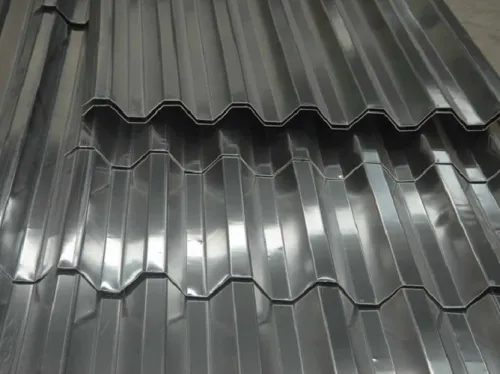
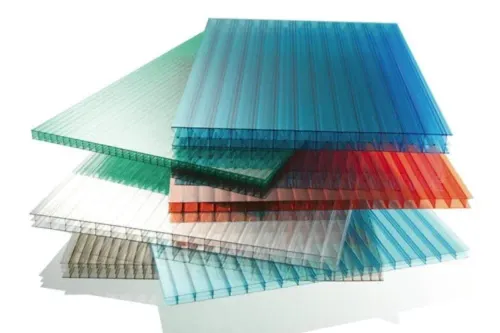
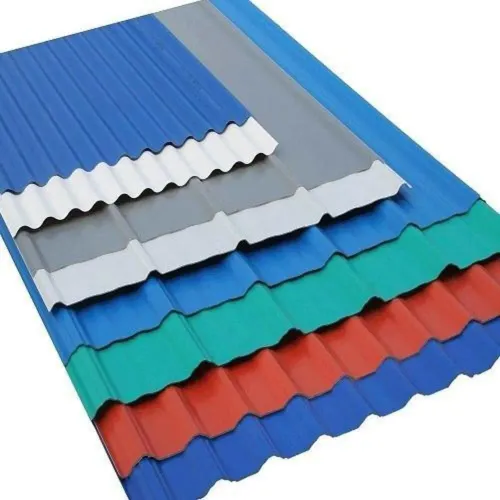
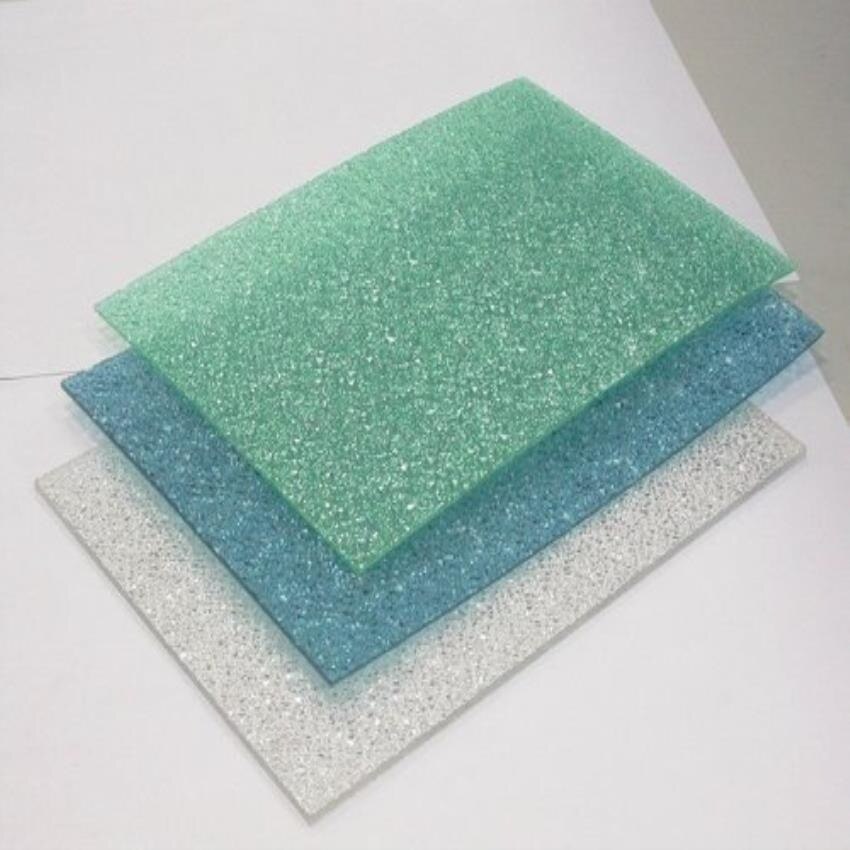
Embossed polycarbonate is a textured roofing product; corrugated polycarbonate is a profiled, lightweight roofing panel. Multiwall polycarbonate is a cellular panel with air gaps, chosen for low weight and insulation rather than maximum impact resistance.
| Material | Construction and best use | Impact, weight and insulation | Light and service trade-off |
|---|---|---|---|
| Solid polycarbonate | Flat glazing, guards, partitions and barriers | High impact resistance; lighter than glass; low insulation | Clear versions transmit more light; replacement is easier than glass |
| Embossed or corrugated polycarbonate | Textured or profiled roofing | Light; moderate impact resistance; little insulation | Diffuses or transmits light according to profile; fixing and drainage matter |
| Multiwall polycarbonate | Cellular roofing, skylights and insulated enclosures | Very light; better insulation; lower resistance to concentrated impact | Diffused light; cells need sealed ends and careful cleaning |
| Acrylic | Clear glazing and displays | Lighter than glass; less impact-resistant than polycarbonate; little insulation | Good clarity, but cracking increases replacement effort |
| Glass | Heavy-duty glazing and high optical clarity | Heavy; brittle under impact; little insulation unless double-glazed | Excellent clarity and surface durability; breakage makes replacement demanding |
| FRP | Opaque or translucent roofing and industrial cladding | Light; impact and weather performance depend on resin and reinforcement | Diffused light; surface ageing and fibre exposure require inspection |
| PVC | Economical cladding or roofing | Light; lower impact margin; little insulation | Light transmission and weather life depend strongly on grade |
Clear, bronze, opal, tinted and textured finishes alter light transmission, price and lead time. Request the declared light-transmission percentage, not merely “clear” or “translucent.”
How thick should the solid sheet be, and can it serve as a roof?
Choose 2–4 mm for light interior work, 5–6 mm when impact and stiffness matter, and 8–12 mm for demanding barriers or heavy glazing. Thickness alone is not a structural design.
| Thickness | Practical match | Decision point |
|---|---|---|
| 2 mm | Light glazing, covers and small partitions | Lowest weight and price; limited stiffness |
| 3 mm | Interior partitions and light machine guards | Easier handling, with a modest impact margin |
| 4 mm | Machine guards, partitions and protected glazing | Better rigidity without heavy handling |
| 5 mm | Robust guards, partitions and small skylights | Useful balance of stiffness, weight and cost |
| 6 mm | Larger skylights and impact-exposed glazing | More stiffness, weight and fixing demand |
| 8 mm | Heavy-duty barriers and substantial glazing | Higher impact margin; check support spacing |
| 10 mm | Thick barriers and specialist overhead glazing | Expensive and difficult to handle |
| 12 mm | Heavy barriers or engineered glazing | Not a roof specification by itself |
A flat solid panel overhead requires load and deflection checks before purchase. Roof suitability depends on clear span, purlin or support spacing, wind load, slope, drainage, thermal movement and the engineered fixing system; a thick sheet can still sag, leak or lift.
Ask whether the roofing quotation is for solid sheet, embossed sheet, corrugated sheet or hollow multiwall material. Thick solid glazing is normally supplied flat, so polycarbonate solid sheet rolls in Pune requires a specific gauge, roll width, roll length, core diameter and permitted bending radius.
Higher thickness improves stiffness and impact margin but raises price, weight, transport difficulty and cutting effort.
How do you install and handle solid polycarbonate without damaging it?
Allow movement before fixing: a 3 m polycarbonate solid sheet can change length by roughly 8 mm across a 40°C temperature swing, using 6.5 × 10⁻⁵ per °C. Drill oversized clearance holes and let joints accommodate this movement instead of clamping the panel rigidly.
Use fasteners only on supported lines, keep them clear of edges and corners, and tighten until the compatible EPDM weather-sealing washer seals without crushing the sheet. Over-tightening causes cracks, distortion and washer pull-through. Provide continuous edge support, compatible joint profiles and end closures; ordinary metal-sheet fixings do not substitute for these details.
| Installation detail | Prevents |
|---|---|
| Oversized holes and movement joints | Thermal cracking and buckling |
| EPDM sealing washers | Leaks and washer damage |
| Supported fixing lines | Vibration and distortion |
| Edge support, joint profiles and end closures | Open edges and water entry |
Cut with a fine-tooth saw or a fabrication method approved for polycarbonate. Drill with a sharp bit and controlled pressure, securing the panel so unsupported vibration does not chip or crack the hole.
- Keep protective masking intact during cutting and drilling.
- Support panels during transport; do not drag them across abrasive surfaces.
- Store them flat on a level surface in a shaded, dry location.
- Remove masking within the supplier’s stated period.
Ask which face carries the co-extruded UV layer, whether protection is one-sided or two-sided, and which face must face outdoors. A generic “UV treated” claim does not answer those questions.
How should you evaluate a polycarbonate solid sheet supplier near Pune?
A dependable polycarbonate solid sheet supplier in Pune will document the material, not just quote a low number. Compare delivered cost from suppliers serving Bhosari–Pimpri-Chinchwad, Chakan and Ranjangaon; an attractive ex-depot polycarbonate solid sheet price in Pune can increase after freight, cutting, edge protection and breakage risk.
| Question | Dependable answer | Warning sign |
|---|---|---|
| Construction | Solid, non-cellular sheet with stated thickness | “Roofing sheet” with no construction |
| Material | Resin described as virgin, recycled-content or impact-modified | Resin grade withheld |
| Evidence | Physical sample, datasheet, batch number and measured thickness or tolerance | Marketplace image only |
| Performance | UV-face marking, warranty, optical and chemical-resistance data, plus required fire or impact classification | “Weatherproof” used as the only claim |
Ask these questions before comparing quotations:
- Is masking supplied on both faces, and which face has the co-extruded UV layer?
- What are the minimum order, cutting capability, edge protection, breakage responsibility and lead time?
- Does the datasheet state light transmission, chemical resistance and the classification required for your assembly?
- Is the quoted material flat solid sheet? Thick sheets are generally flat; polycarbonate solid sheet rolls in Pune usually means thin gauge or film, so request gauge, roll width, roll length, core diameter and permitted bending radius.
Motilal Sheshmal and company is one Pune-based supplier to include, while checking the same documents, delivered price and application suitability against competing quotations. A roll price is not comparable with a flat-sheet quote until those specifications match.
Related product
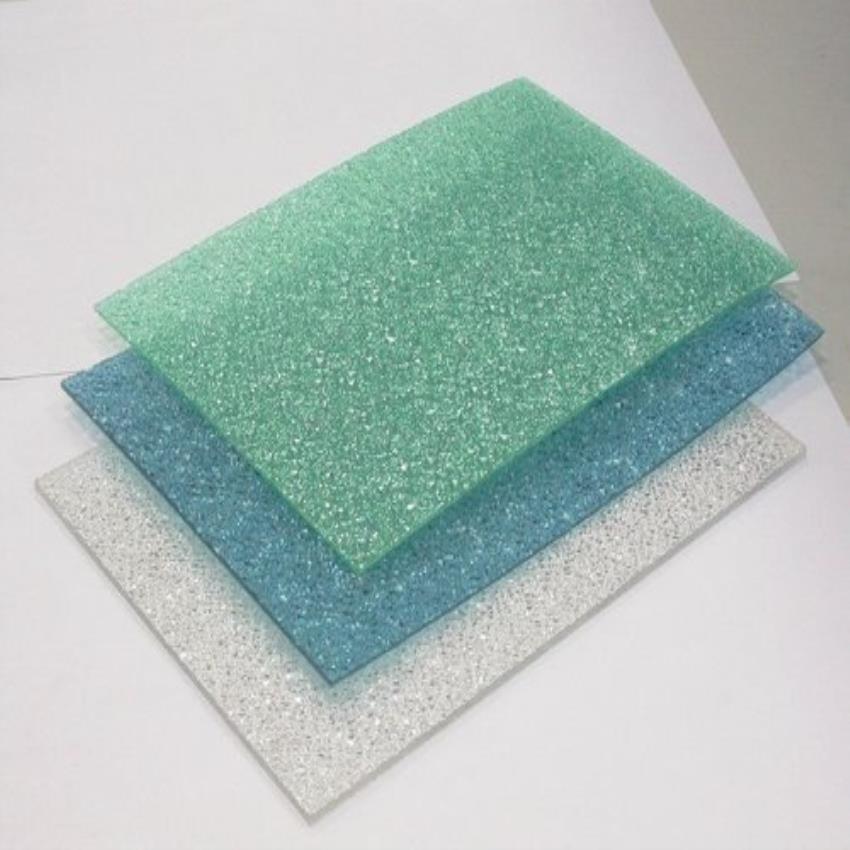 | Polycarbonate Embossed / Solid Rolls & Sheets Polycarbonate Embossed / Solid Rolls & Sheets Embossed Thickness : 2 mm. / 3mm. / 4 mm. Colour : Clear / Bronze / Green / Blue / Opal / M.Grey Size : 1.22 Mtr. x 33.500 Mtr. / 2.1 Mtr. View product → |
Frequently asked questions
What should a polycarbonate solid sheet cost in Pune?
Budget about ₹90–₹450 per sq ft for an ordinary flat, UV-protected sheet. Thickness, grade, colour, order quantity and conversion losses can change the final Pune price.
Which material fits a polycarbonate construction job?
Compare solid polycarbonate with multiwall polycarbonate, acrylic, glass, FRP and metal sheets. Select based on impact resistance, insulation, transparency, weight, fire performance, durability and budget.
How thick should a solid polycarbonate sheet be for roofing?
Choose thickness from the unsupported span, wind load, fixing pattern, impact exposure and drainage design. Solid sheet can serve as a roof when the structure, slope, fasteners and expansion allowance are designed for it.
How do you install and handle solid polycarbonate without damage?
Keep protective film on during cutting, support the sheet fully, use sharp tools, drill oversized fixing holes for thermal movement and fit compatible washers without overtightening.
How should you evaluate a polycarbonate solid sheet supplier near Pune?
Ask for thickness and size tolerances, UV-protection details, batch identification, technical data, cutting capability, delivery terms, replacement policy and a written quotation with GST and transport shown separately.