
A fibre-cement sheet is not automatically an approved substitute for a Birla wall panel: its role, tested assembly and fixing details must match the project specification. By the end, you can classify the sheet as a facing, liner, backing or independent cladding layer, compare its performance, and request a Panaji quotation that covers the real installation cost.
Key takeaways
- Define the sheet’s role before choosing thickness or finish.
- Match thickness to span, frame support and fixing detail.
- Protect cut edges and sheets from moisture during handling.
- Compare Panaji quotes using identical specifications and delivery terms.
Decide where the sheet belongs in the Birla wall-panel build-up
Treat a fiber cement plain sheet as a defined layer, not a generic substitute: decide whether it is the visible facing, concealed lining, backing board, partition infill, or independent exterior cladding layer before selecting it. A fiber cement plain sheet for Birla wall panel architects may fit one role while being unsuitable for another.
- Facing: the sheet remains exposed, so its surface finish, joints, coating system and impact resistance control the appearance.
- Lining: it forms the room-side surface over a frame, insulation or service cavity.
- Backing board: it supports a finish or another layer and is not automatically a weather barrier.
- Partition infill: it closes a framed partition; confirm whether the specified assembly needs a separate core or insulation.
- Independent cladding: it sits outside the wall-panel system on its own rails, cavity and weather-control details.
Do not turn a concealed backing board into the exterior weather skin without written approval. Check the Birla wall-panel manufacturer’s approved build-up, compatible screw, framing gauge and spacing, joint treatment, cavity, vapour-control layer, opening reinforcement and fire and acoustic test scope.
Request the maximum unsupported span and the exact fixing detail. A sheet can match the panel dimensions yet invalidate the tested wall assembly when its joints, fasteners or layers change. Confirm the project specification also permits the proposed facing or lining before ordering.
Compare performance before choosing thickness
Thickness is only useful after you compare the complete wall build-up, not the board alone. Fiber cement sheet architects should check the Birla wall-panel manufacturer’s tested assembly, because a sheet that fits the framing can still invalidate fire or acoustic performance.
| Performance | Fiber cement plain sheet | Birla wall panel |
|---|---|---|
| Fire | Confirm the sheet classification and tested joint, screw and lining detail; the board alone gives no wall rating. | Use the manufacturer’s tested fire assembly and stated duration. |
| Moisture | Handles wet exposure only with sealed edges, treated joints and a suitable coating or cavity. | Core, skins, joints and vapour control determine moisture behaviour. |
| Acoustics | Performance depends on framing, cavities, insulation and sealed joints; thickness alone is not a rating. | Compare the declared assembly result, including joints and penetrations. |
| Insulation | A sheet provides little thermal insulation by itself. | An insulated core usually provides the main thermal resistance; request its declared value. |
| Impact | Greater thickness can improve robustness, but demand an impact test for the use. | Compare skin, core and fixing performance against the same impact requirement. |
| Weight | Weight rises from 6 to 18 mm and increases frame and handling loads. | Compare complete system weight per square metre. |
| Speed | Requires cutting, joint treatment, coating and drying. | Larger factory-made panels can reduce site operations. |
| Finish | Needs a sample showing face, edge, joint and coating. | Factory finish may be faster, but check repairs and colour matching. |
Choose 6, 8, 10, 12, 15 or 18 mm only after confirming span, fixing spacing, impact demand and allowable weight. Request the actual test reports and approve a sample panel before ordering.
Specify the frame, span and fixing detail
A sheet that matches the panel dimensions can still invalidate the tested wall assembly. Before ordering, obtain the Birla wall-panel manufacturer’s approved interface detail for the exact wall, ceiling, soffit or exterior cladding build-up.
1. Confirm the design span: maximum unsupported distance, support direction, perimeter restraint, intermediate framing and deflection limit. Do not assume a 6, 8, 10, 12, 15 or 18 mm sheet is interchangeable across applications.
2. Specify the frame: framing material, gauge, section size, corrosion protection, stud or joist spacing, and the reinforcement required around doors, windows, service openings and panel joints.
3. Record the fixing schedule: approved screw type, diameter, length, corrosion rating, edge distance, perimeter spacing, field spacing and washer requirement. A generic self-drilling screw can crack the edge, strip the frame or fail the tested assembly.
4. Detail every joint, including perimeter clearance, intermediate movement joints, joint tape or sealant, corner treatment and the method for accommodating moisture and temperature movement. Tight-butting sheets and rigidly filling every joint commonly produce cracks and visible joint lines.
5. Request the manufacturer’s fire and acoustic test reports for the complete build-up, including the sheet, panel, frame, insulation, joints and fixings. Also ask the supplier to identify the exact BIS standard, licence or test-report basis for the offered sheet.
Release the purchase order only after these documents confirm the maximum span and fixing detail. A sheet suitable as a concealed backing board is not automatically valid as an exposed weather skin or soffit lining.
Control moisture, finish quality and site handling
Prevent failures by treating the sheet’s face, edges, joints, cavity and cut dust as separate controls. A backing board does not automatically qualify as an exposed weather skin.
- State fibre-cement composition, nominal thickness, sheet size, edge profile, surface finish, density or strength class, water-performance requirement, and whether the sheet is factory-sealed or intended for paint, texture coat or tile.
- Coordinate a drained, ventilated cavity, vapour-control layer, flashings, sealants, drainage paths and approved joint treatment with the wall-panel build-up. Blocked drainage traps monsoon water behind the board.
- Approve a sample showing the actual face, edge, joint and proposed coating. Confirm screw-head treatment and joint movement; catalogue images do not prove the finished appearance.
- Use the manufacturer’s cutting method, local dust extraction or wet control, eye protection and suitable respiratory protection. Do not dry-sweep accumulated dust; vacuum it with equipment designed for fine dust.
- Stack sheets flat on level bearers, keep them covered and dry, and lift rather than drag them. Treat site-cut edges with the manufacturer-approved sealer before exposure.
| Control | Exposed finished face | Concealed liner or backing |
|---|---|---|
| Moisture | Seal cut edges and coat the approved face; detail flashing and drainage | Protect edges and joints, but follow the panel maker’s barrier and cavity detail |
| Fixings | Specify corrosion-resistant screws, washers and compatible sealant for coastal exposure | Match screw coating and length to the frame and concealed environment |
| Finish | Approve a physical sample before bulk ordering | Confirm that joints, screw heads and texture will remain hidden |
Turn Panaji availability into a comparable delivered quote
A comparable quote is the delivered cost per usable square metre, not the advertised price per sheet. Ask every fiber cement plain sheet supplier in Panaji for a dated quotation showing validity, delivery date, sheet dimensions, thickness, pack quantity, GST, freight, unloading, breakage allowance, and any cutting or edge-finishing charge.
Use this procedure before issuing the wall-panel purchase order:
1. Verify physical stock, not catalogue presence. Obtain photographs of the packs, batch numbers, quantity available, packaging condition and lot traceability. Confirm that the supplier can deliver the complete requirement from one consistent batch where appearance matters.
2. Request the product data sheet, installation guidance, warranty or replacement policy, and evidence of declared compliance with EN 12467. “ISI” or “fibre cement” alone does not document full compliance with that standard.
3. Confirm logistics in writing: vehicle access to the site, unloading responsibility, transit-damage reporting deadline, replacement process and whether architectural samples come from the same product line.
4. Calculate the cement plain sheet price in Panaji after freight and GST, then divide by usable coverage after joints, cutting waste and damaged sheets. Record the minimum order and any difference between ex-depot and delivered pricing.
5. Treat plain cement sheet availability as unconfirmed until the supplier states ready stock or a production slot. Motilal Sheshmal and company can be asked to quote the same schedule so you can compare stock, documentation and landed cost on identical terms.
Related product
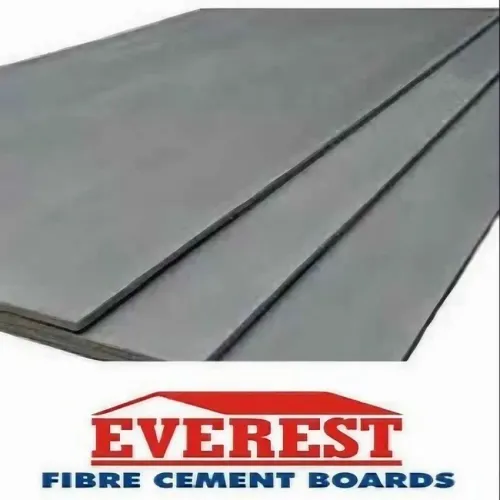
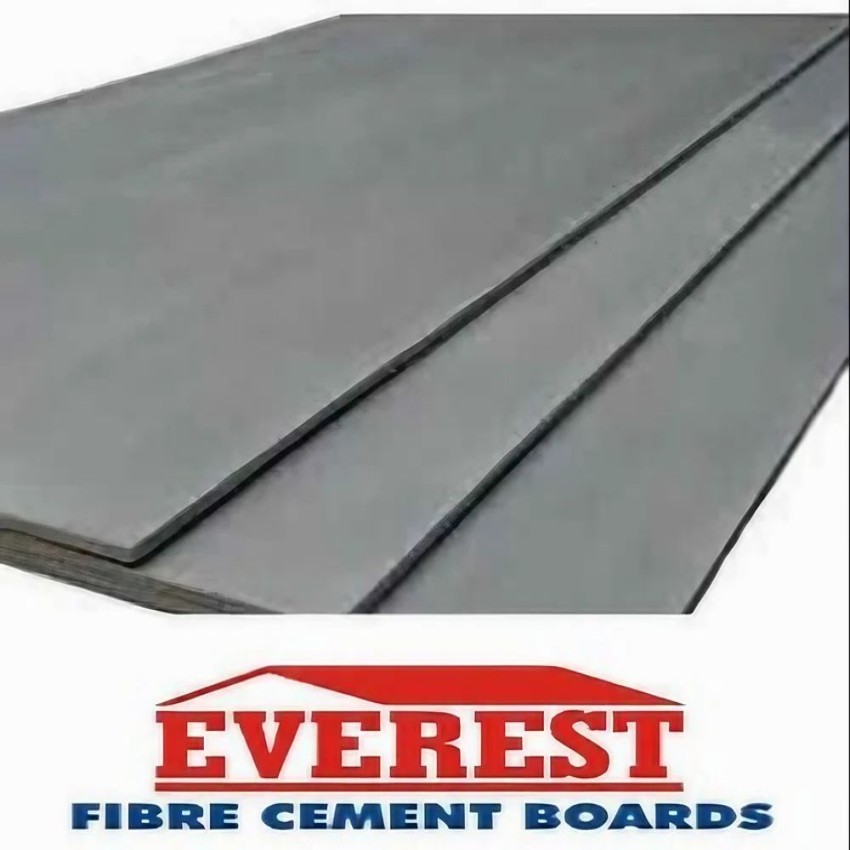 | Everest fiber Cement Plain Sheets Thickness : 6 / 8 / 10 / 12 / 15 / 18mm Size : 4' x 4', 6' x 4, 8' x 4. Application : Internal & External Cladding, False ceiling etc. View product → |
Frequently asked questions
Where can a fiber cement plain sheet belong in a Birla wall-panel build-up?
Use it as a visible facing, concealed lining, backing board, partition infill or independent exterior cladding layer, then check whether its performance suits that role.
What should architects compare before choosing fiber cement sheet thickness?
Compare the sheet’s intended exposure, span, frame support, fixing method, stiffness requirement and finish before selecting thickness.
What frame and fixing details should be specified?
Specify the frame material, member spacing, sheet span, fastener type, edge distances, joint treatment and movement allowance.
How can buyers compare a fiber cement plain sheet supplier in Panaji?
Request matching sheet specifications, quantities, cut sizes, packing, delivery location, taxes, lead time and unloading terms in every quote.